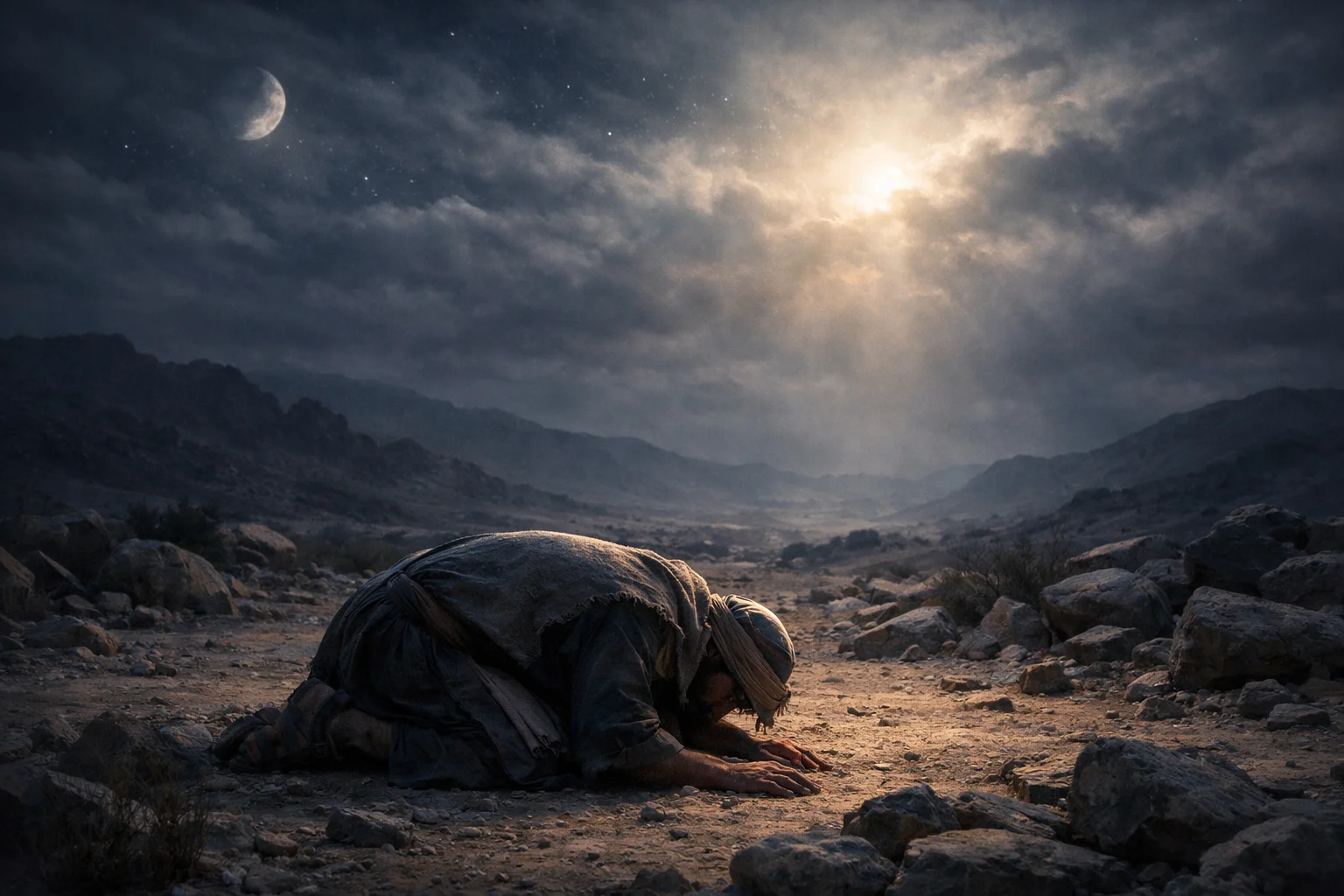

Human Frailty Before Holiness
거룩하심 앞에 선 인간의 연약함
Passage
Job 25 (vv. 4-6)
Mood
solemn
Description
The second scene turns from the grandeur of heaven to the weakness of humanity. Under a dim moon and faint stars, a lone mortal bows low to the earth in the wilderness, his posture expressing shame, fragility, and dependence. The heavenly bodies above appear subdued rather than glorious, reinforcing Bildad's claim that even the moon and stars are not pure before God. The contrast between the dim sky and the lowly human form captures the passage's sobering message: before divine holiness, human righteousness cannot stand on its own.
설명
두 번째 장면은 하늘의 장엄함에서 인간의 연약함으로 시선을 옮긴다. 희미한 달과 빛을 잃은 별들 아래, 한 인간이 광야의 땅에 몸을 낮추고 엎드려 있으며, 그의 자세는 수치심과 연약함, 의존을 드러낸다. 하늘의 천체들은 영광스럽기보다 빛이 바랜 모습으로 보이며, 이는 달과 별조차 하나님 앞에서는 깨끗하지 않다는 빌닷의 주장을 강화한다. 어두운 하늘과 낮아진 인간의 형상 사이의 대비는 하나님의 거룩하심 앞에서 인간의 의로움이 스스로 설 수 없다는 이 본문의 엄숙한 메시지를 담아낸다.
Size
1536x1024
Generated
2026-03-14T22:47:50.038287
Image Prompt
Style