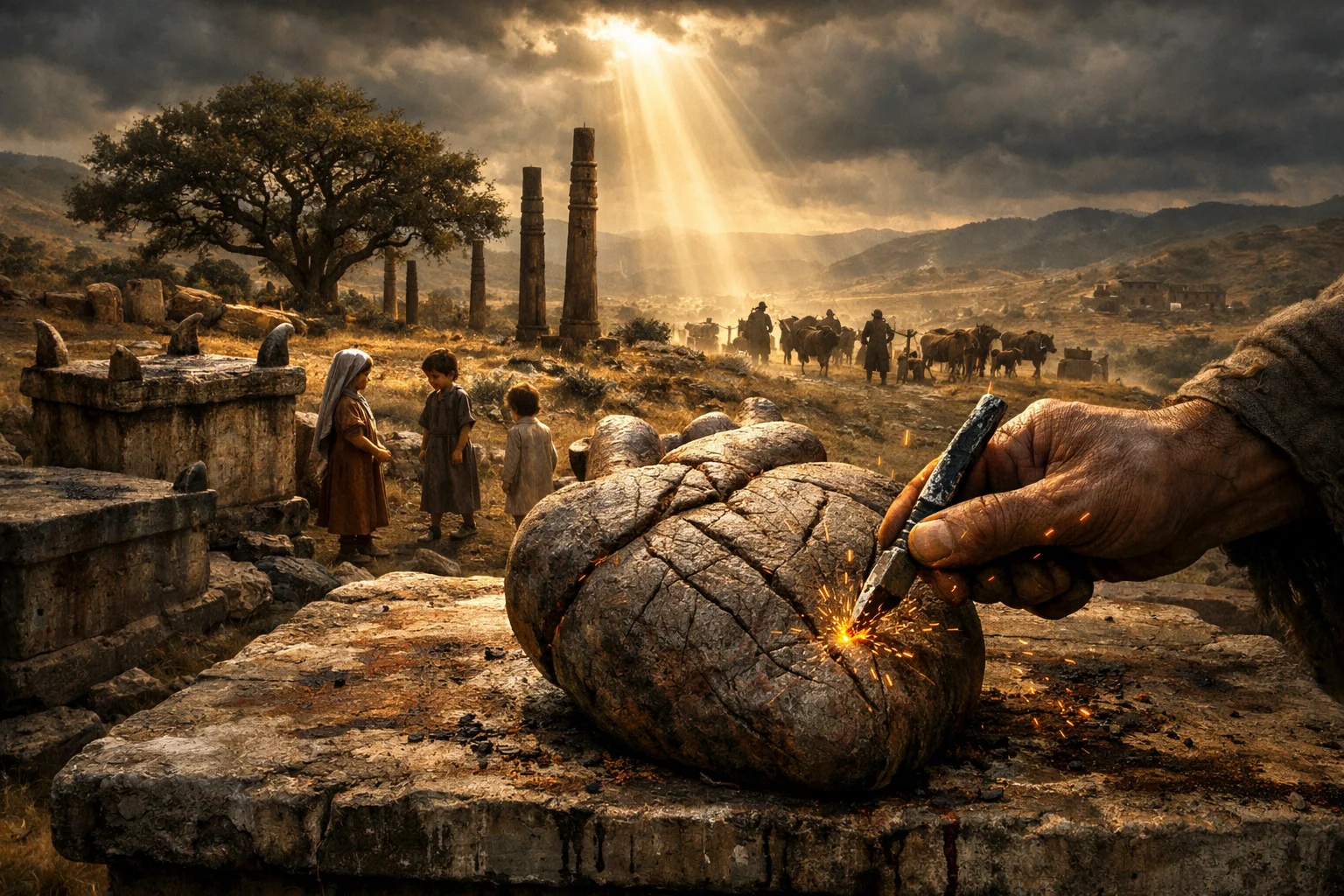

Sin Engraved on the Heart
마음에 새겨진 죄
Passage
Jeremiah 17 (vv. 1-4)
Mood
solemn
Description
The scene visualizes Judah’s sin as something carved permanently and painfully into the very core of the people. An iron stylus with a flint tip is shown etching words into a symbolic stone-like heart, while nearby stand idolatrous altars with prominent horns and Asherah poles beneath leafy trees on elevated hills. Children linger near these shrines, showing how deeply idolatry has been remembered and passed down. In the distance, the land’s treasures and inheritance appear vulnerable, as if about to be carried away by foreign plunderers, conveying the loss and exile that Judah’s own sin has brought upon them.
설명
이 장면은 유다의 죄가 백성의 가장 깊은 중심에 영구적이고 고통스럽게 새겨진 것으로 시각화한다. 부싯돌 끝이 달린 쇠 필기구가 상징적인 돌 같은 심장에 글을 새기고 있고, 그 곁에는 뿔 달린 우상 제단들과 푸른 나무 아래 높은 언덕에 세워진 아세라 목상들이 서 있다. 아이들이 이 신당 주변에 머물러 있어 우상숭배가 얼마나 깊이 기억되고 대대로 전해졌는지를 보여 준다. 멀리서는 그 땅의 보물과 유업이 외적의 약탈에 넘어가기 직전처럼 위태롭게 보이며, 유다의 죄가 초래한 상실과 포로 됨을 드러낸다.
Size
1536x1024
Generated
2026-03-18T13:57:50.292186
Image Prompt
Style