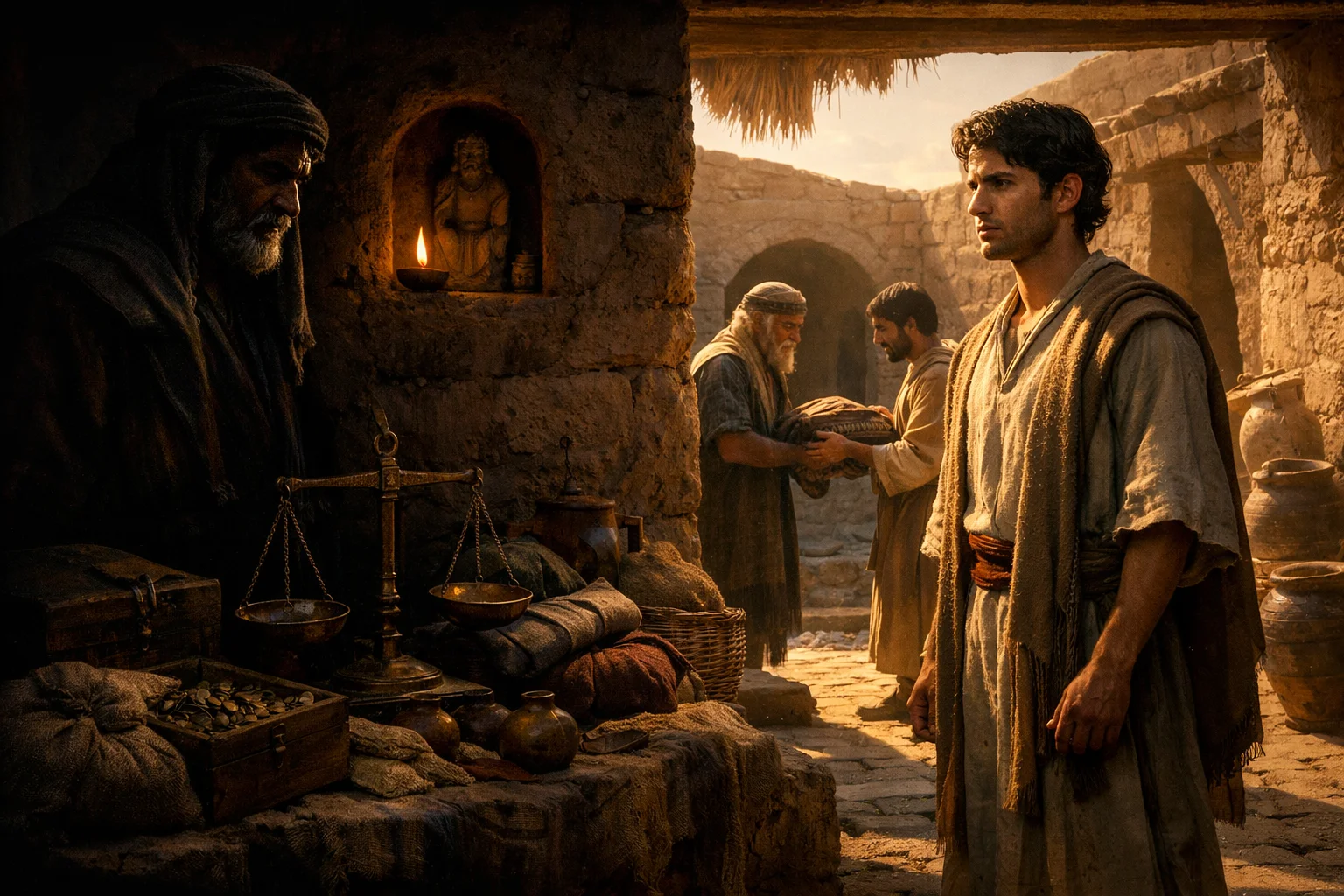


A Son Who Rejects His Father’s Evil
아버지의 악을 거부한 아들
Passage
Ezekiel 18 (vv. 10-18)
Mood
resolute
Description
The passage contrasts generations: a violent and unjust son arises from a righteous father, yet later a grandson sees his father’s sins and deliberately turns away from them. This scene should focus on the grandson’s moral awakening as he witnesses the corruption around him but chooses another path. The visual power lies in the contrast between inherited example and personal decision, showing that guilt and righteousness are not mechanically passed down.
설명
이 본문은 세대 간의 대조를 보여 준다. 의로운 아버지에게서 포악하고 불의한 아들이 나오지만, 그 뒤에 손자는 자기 아버지의 죄를 보고도 그것을 따르지 않기로 결심한다. 이 장면은 타락한 현실을 목격하면서도 다른 길을 택하는 손자의 도덕적 각성을 중심으로 표현해야 한다. 시각적 힘은 물려받은 본보기와 개인의 선택 사이의 대비에 있으며, 죄와 의가 기계적으로 세습되지 않음을 보여 준다.
Size
1536x1024
Generated
2026-03-18T15:32:03.422987
Image Prompt
Style