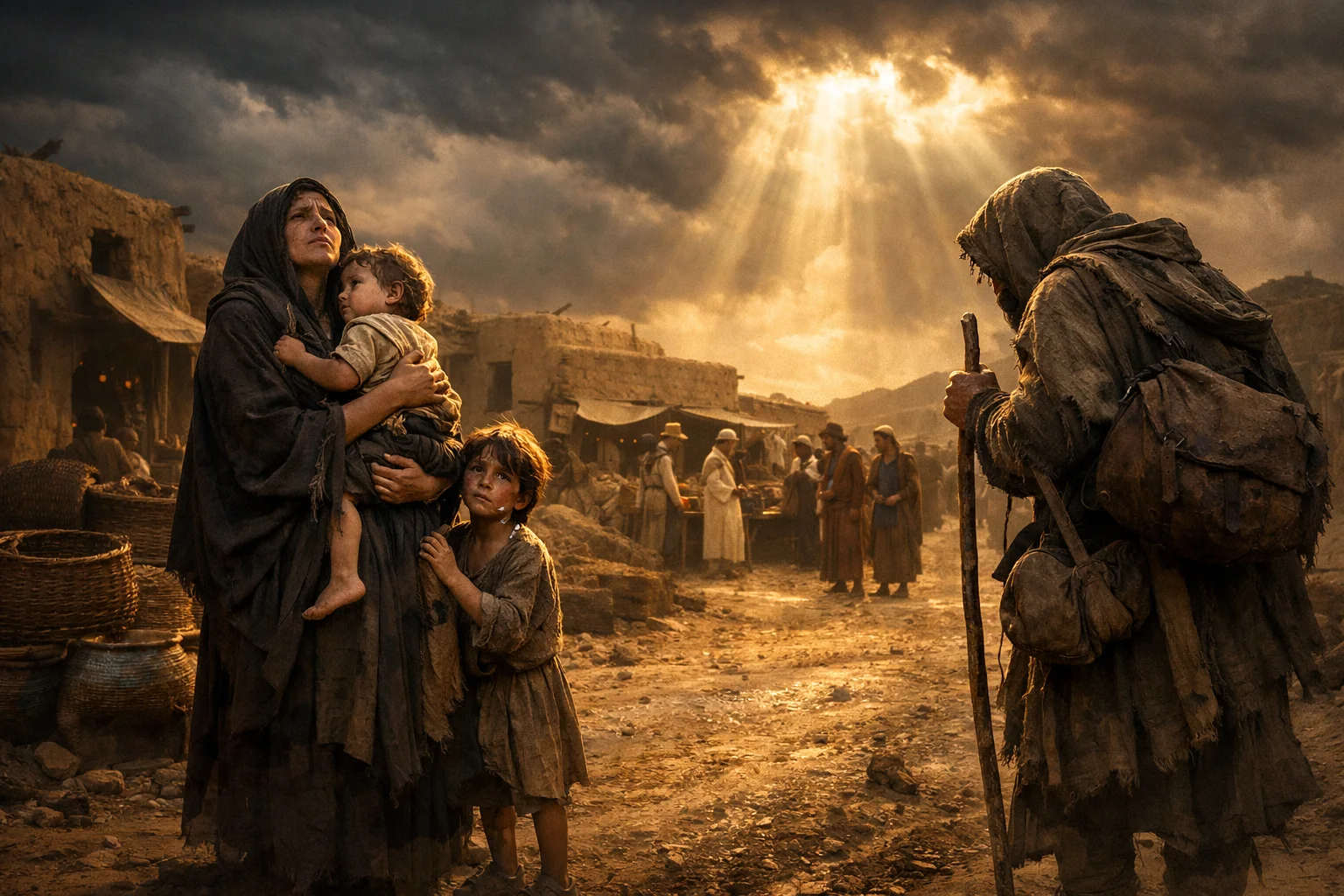


The Cry of the Widow and the Foreigner
과부와 나그네의 부르짖음
Passage
Exodus 22 (vv. 21-24)
Mood
compassionate warning
Description
A foreigner in travel-worn clothing, a widow, and fatherless children stand on the edge of the community, visibly vulnerable before wealthier townsmen who loom in the background. Their faces show exhaustion and grief, yet they lift their eyes upward as if crying out for justice. Above them, storm-dark clouds part with a fierce, radiant light, symbolizing that the LORD hears the oppressed and will answer. The scene visualizes the moral center of the chapter: God’s deep concern for those who can easily be mistreated.
설명
여행의 흔적이 남은 옷차림의 나그네와 과부와 아버지 없는 아이들이 공동체의 가장자리에 서서, 뒤편에 보이는 더 부유한 마을 사람들 앞에서 연약한 처지를 드러낸다. 그들의 얼굴에는 지침과 슬픔이 서려 있지만, 동시에 정의를 호소하듯 눈을 위로 든다. 그들 위로는 폭풍 같은 어두운 구름이 갈라지고 강렬한 빛이 비추어, 여호와께서 억눌린 자의 부르짖음을 들으시고 응답하심을 상징한다. 이 장면은 쉽게 학대당할 수 있는 이들에 대한 하나님의 깊은 관심이라는 이 장의 도덕적 중심을 시각화한다.
Size
1536x1024
Generated
2026-03-14T13:36:35.703805
Image Prompt
Style